A Comprehensive Guide to Site SEO Optimization for Better Rankings in 2026
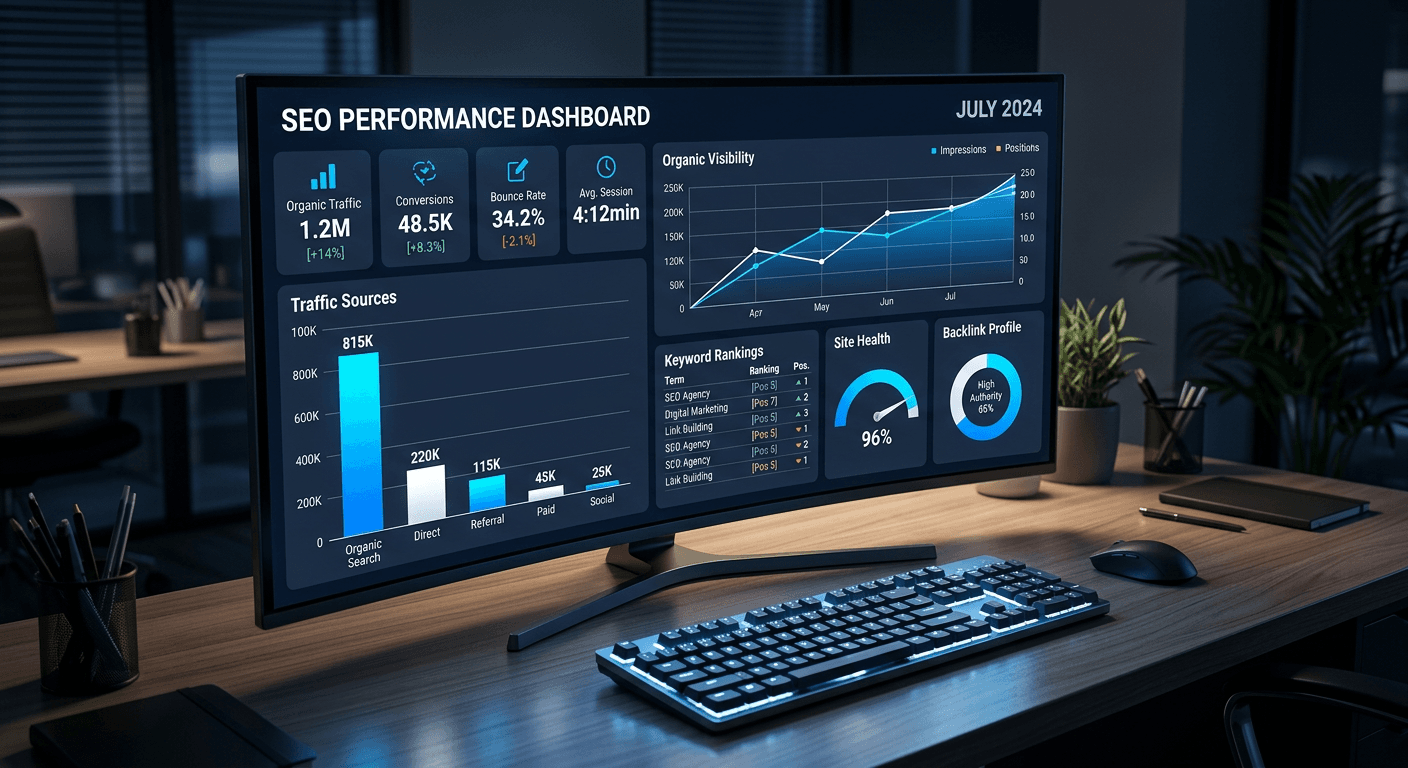
Achieving consistent search engine visibility requires a rigorous approach to site SEO optimization. Modern search algorithms prioritize websites that provide a seamless user experience, fast loading times, and a clear, crawlable architecture. By addressing foundational technical elements, you create a robust infrastructure that allows search engine bots to index your content effectively and accurately, which is essential for any SEO for site strategy targeting competitive markets.
Quick Summary {#quick-summary}
Site SEO optimization involves refining the technical and structural components of a website to improve its discoverability and ranking potential. By ensuring high performance, mobile responsiveness, and clean code, you help search engines better understand your content.
- Audit site speed and core web vitals regularly.
- Optimize internal linking for logical site structure.
- Ensure full mobile responsiveness and accessibility.
- Implement secure, schema-friendly, and crawlable architecture.
Table of Contents {#table-of-contents}
- Quick Summary
- Auditing Your Technical Infrastructure
- Optimizing Website Architecture and Crawlability
- Enhancing Page Experience and Core Web Vitals
- Content Structure and Metadata Management
- Common Pitfalls and Troubleshooting
- Frequently Asked Questions
- Recommended Reads

Auditing Your Technical Infrastructure {#auditing-your-technical-infrastructure}
Before implementing changes, you must establish a baseline. An effective seo on site audit starts with identifying bottlenecks that prevent search engine crawlers from accessing your pages. Use diagnostic tools to analyze response codes, looking specifically for 4xx client errors that suggest broken pages and 5xx server errors that indicate host instability. Identifying these issues early prevents wasted crawl budget and improves your overall site quality score.
Beyond basic error reporting, evaluate your server's response time and security headers. A secure, encrypted connection via HTTPS is no longer optional; it is a fundamental ranking signal. Review your robots.txt file to ensure you aren't inadvertently blocking essential pages from being indexed, and examine your sitemap to confirm that all high-priority content is correctly listed and accessible for search engine crawlers.
Optimizing Website Architecture and Crawlability {#optimizing-website-architecture-and-crawlability}
Search engines favor websites with a logical, shallow hierarchy. Ideally, any page on your domain should be reachable within three clicks from the homepage. A flat structure distributes page authority more effectively and makes it easier for users to navigate. Audit your site’s internal linking to ensure that primary keywords and topics are linked from high-authority pages, reinforcing their relevance.
Canonicalization is equally critical for seo optimisation website success. If your site generates multiple URLs for the same content - common in e-commerce or filtered search results - use canonical tags to tell search engines which version is the master copy. This prevents duplicate content issues, which can dilute your ranking signals and confuse search algorithms regarding which page is truly the most authoritative.
Enhancing Page Experience and Core Web Vitals {#enhancing-page-experience-and-core-web-vitals}
Google’s Core Web Vitals serve as a proxy for how a user perceives the speed, responsiveness, and visual stability of a page. To optimize for these, prioritize minimizing render-blocking JavaScript and CSS. By deferring non-essential scripts and compressing assets like images, you significantly improve the Largest Contentful Paint (LCP) score, which measures how quickly the main content of your page becomes visible.
Cumulative Layout Shift (CLS) is another vital metric that developers often overlook. This measures the unexpected movement of page elements while the page is loading. To maintain a stable score, always define explicit width and height dimensions for images and video containers. This ensures that the browser reserves the necessary space, preventing content from jumping around and providing a smoother, more professional user experience that search algorithms reward.
Content Structure and Metadata Management {#content-structure-and-metadata-management}
Technical performance is only half the battle; content organization ensures search engines can extract meaningful data from your pages. Use descriptive, unique meta titles and descriptions for every page, as these are your primary advertisements in search results. Ensure that your H-tag hierarchy (H1 through H3) is used logically to outline your content, providing a clear map of topics for crawlers to follow.
Consider implementing structured data (Schema markup) to enhance your presence in search results. Schema helps machines understand the context of your content, such as whether a page is a product, an article, or an event. Providing this additional layer of information allows search engines to display rich snippets, which can significantly increase your click-through rates and establish your site as a more relevant, authoritative result for specific search queries.
Common Pitfalls and Troubleshooting {#common-pitfalls-and-troubleshooting}
One frequent mistake is an over-reliance on plugins to manage technical SEO. While convenient, too many plugins often lead to bloated code and slower load times. Instead, focus on clean, optimized code that requires fewer dependencies. Regularly monitor your site for broken internal links, as these create dead ends for crawlers and frustrate human users.
Another common issue is improper mobile optimization. With the shift toward mobile-first indexing, having a separate mobile sub-domain is rarely recommended. Focus instead on a single, responsive design that adapts seamlessly to all screen sizes. If your site experiences ranking drops after a major update, cross-reference your traffic logs with recent changes in your robots.txt or sitemap to ensure no critical sections of your site were accidentally restricted.
Pro Tip: Never perform major architectural changes without a staging environment. Test your SEO changes in an isolated, non-indexed setting to verify that internal link structures and redirect rules behave as expected before pushing to production.
Frequently Asked Questions {#frequently-asked-questions}
- How often should I perform an SEO audit? Quarterly audits are generally recommended, though you should perform a technical check whenever you roll out significant site updates or structural changes.
- Why does my site speed vary across different tools? Different tools use different metrics and locations. Focus on the core web vitals reported by search engines, as these carry the most weight for ranking.
- Does social media impact site SEO? While social media is not a direct ranking factor, the increased visibility and traffic generated from social platforms can lead to more natural, high-quality backlinks.
- Is it better to have a deep or shallow site structure? A shallower structure is almost always better for both user experience and search crawler efficiency.