Advanced Strategies for Website SEO Ranking
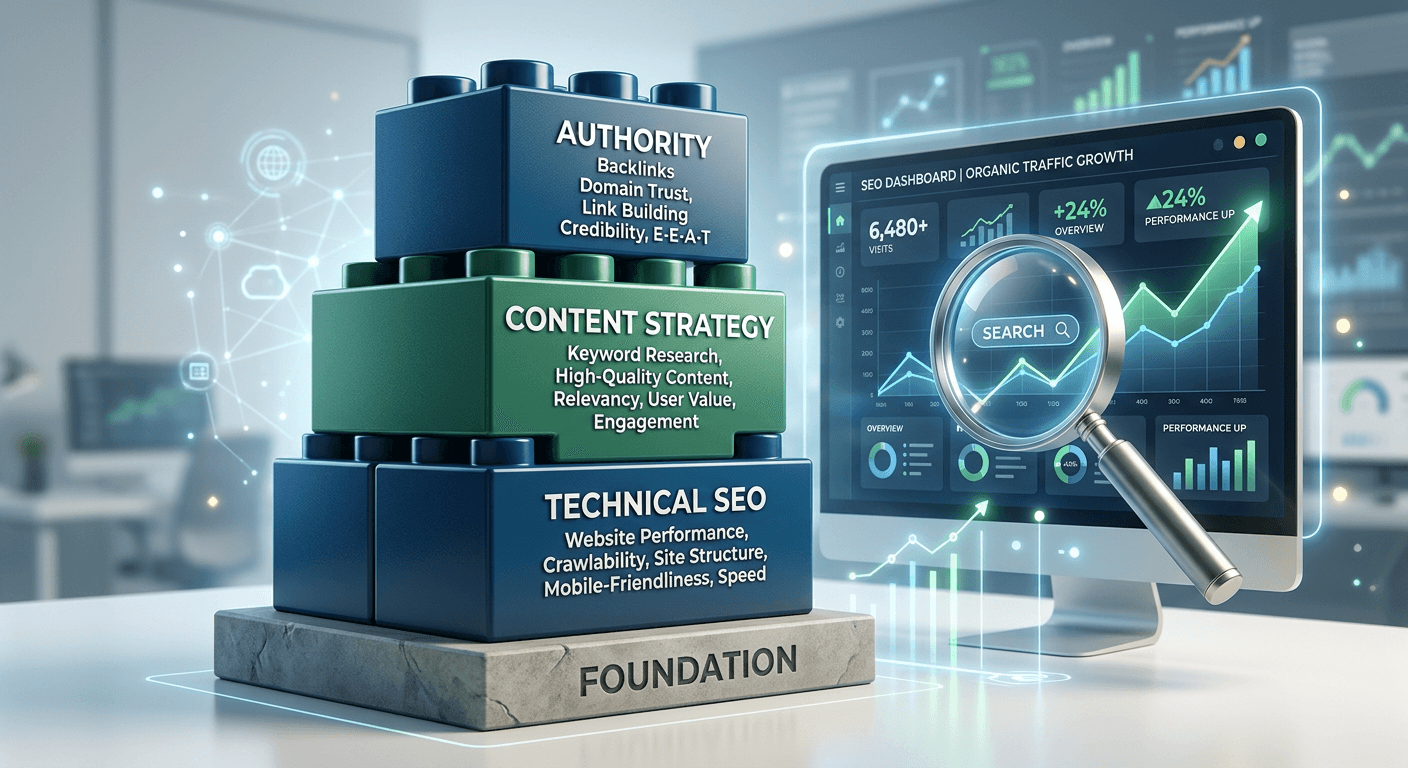
Achieving a top-tier ranking seo website status is no longer a matter of keyword density or backlink volume alone; it is a sophisticated orchestration of technical performance, user intent satisfaction, and E-E-A-T (Experience, Expertise, Authoritativeness, and Trustworthiness) signals. Modern search algorithms prioritize the holistic experience of a visitor, demanding that site architecture, content depth, and core web vitals align to provide seamless utility. For webmasters aiming to improve their seo site rank, the strategy must shift from chasing algorithmic loopholes to establishing a robust digital ecosystem that search engines can easily crawl, index, and categorize as high-value.
Quick Summary {#quick-summary}
Website SEO ranking is the process of optimizing a site's structure, content, and authority to achieve higher visibility in search engine result pages (SERPs). Effective ranking requires technical health, semantic content relevance, and a strong backlink profile to satisfy user search intent.
- Technical SEO builds the foundation for crawlability and indexation.
- High-quality content satisfies specific search intent at every funnel stage.
- Authority building through reputable backlinks signals trustworthiness.
- Continuous monitoring allows for data-driven adjustments to maintain performance.
Table of Contents {#table-of-contents}
- Foundations of Website SEO Ranking
- Technical SEO Mechanics
- Content Strategy and Search Intent
- Authority and Trust Building
- Monitoring and Performance Analysis
- Comparison Table: SEO Ranking Factors
- Common Questions Regarding SEO
- Recommended Reads

Foundations of Website SEO Ranking {#foundations-of-website-seo-ranking}
Effective seo site rank improvement begins with understanding how search engines perceive the internet. Search crawlers operate by parsing HTML, following links, and rendering JavaScript to determine if a page is worth serving to a user. If your foundational structure is flawed, even the most compelling content will struggle to gain traction in the SERPs. The primary goal is to minimize the friction between the search engine's effort to index your site and the value you provide to the end user.
Establishing a strong base involves meticulous attention to URL structures, site hierarchy, and internal linking. A logical folder structure helps crawlers understand the relationship between different topics on your domain. For instance, siloed content ensures that authority is passed correctly through your site pages, effectively signaling which subjects your domain specializes in. More information on managing your digital footprint and user expectations can be found in our terms of service guidelines.
Technical SEO Mechanics {#technical-seo-mechanics}
Technical performance is the engine that drives your ranking potential. Core Web Vitals - which measure loading speed, visual stability, and interactivity - are now primary ranking signals. If a page takes more than three seconds to load or experiences significant layout shifts, search engines may penalize your ranking because the experience is perceived as poor. Developers should prioritize minimizing main-thread work and optimizing asset delivery to ensure these metrics remain in the 'good' range.
Beyond speed, crawl budget optimization is critical for larger sites. You can control how search engines view your site by using robots.txt effectively, canonical tags to prevent duplicate content issues, and XML sitemaps to highlight priority pages. Ensuring that your site is mobile-responsive and secure via HTTPS is no longer optional; these are baseline requirements for any site aiming for competitive search visibility. Detailed insights on data handling and user privacy are available through our privacy policy documentation.
Content Strategy and Search Intent {#content-strategy-and-search-intent}
Content is the medium through which you satisfy the user's query. Today's search engines utilize Natural Language Processing (NLP) to understand the nuance of a search, moving beyond simple keyword matching to intent-based results. To rank effectively, your content must provide a direct answer to the user's problem while offering sufficient depth to keep them engaged, thereby reducing bounce rates and improving dwell time.
Mapping Content to the Buyer Journey
Content strategy should be segmented into stages: informational, navigational, commercial, and transactional. Informational content should answer 'how' or 'why' questions without an immediate sales pitch, establishing your site as an authority. As users move closer to a decision, your content should shift toward comparative analysis and social proof. By strategically placing internal links to move users between these stages, you create a cohesive path that boosts overall site engagement and authority metrics.
Pro Tip: Focus on 'Zero-Click' optimization by structuring your content with clear, concise answers to common questions early in your articles. This increases the likelihood of appearing in Featured Snippets, which can significantly boost your organic traffic even if a user doesn't click through to the page.
Authority and Trust Building {#authority-and-trust-building}
Off-page SEO, primarily link building, acts as a 'vote of confidence' from the broader web. However, the quality of these links matters infinitely more than the quantity. A single backlink from a highly authoritative, niche-relevant publication carries more weight than dozens of links from low-quality, unrelated directories. Building genuine authority requires creating linkable assets, such as original research, whitepapers, or comprehensive tools that other industry experts naturally want to cite.
E-E-A-T is the framework used by search engines to assess the credibility of your content. To improve your standing here, prioritize author bios that highlight industry expertise, maintain a transparent 'About Us' section, and ensure your site is free of technical errors that suggest a lack of professional oversight. These trust signals help search engines classify your site as a reliable source of information, which is critical for ranking in 'Your Money, Your Life' (YMYL) sectors.
Monitoring and Performance Analysis {#monitoring-and-performance-analysis}
To effectively manage your progress, you need to regularly check site seo ranking using reliable analytics tools. Monitoring your keyword positions in relation to competitors allows you to identify gaps in your content strategy. It is essential to look beyond just the average ranking; analyze the click-through rates (CTR) and the landing page conversion data to ensure your rankings are actually driving business value.
Using a Website SEO Ranking Checker
A professional website seo ranking checker is an indispensable tool for tracking volatility in the SERPs. When you notice a sudden drop or spike in your positions, cross-reference this with recent algorithm updates and technical changes on your site. Establishing a baseline and monitoring shifts over a 30, 60, and 90-day period will reveal whether your optimizations are gaining traction or if your content needs a refresh to stay relevant.
Comparison Table: SEO Ranking Factors {#comparison-table-seo-ranking-factors}
| Feature | Low Priority | High Priority |
|---|---|---|
| Content | Keyword stuffing | Topical depth and intent satisfaction |
| Backlinks | Quantity-focused link farms | Quality, niche-relevant placements |
| Speed | Bloated frameworks | Optimized Core Web Vitals |
| Accessibility | Desktop only | Mobile-first responsiveness |
Common Questions Regarding SEO {#common-questions-regarding-seo}
How often should I check my site SEO ranking?
Consistency is key. While daily checks might induce anxiety due to minor fluctuations, a weekly or bi-weekly review is typically sufficient to spot trends and make informed decisions without overreacting to daily noise.
Does social media activity affect my ranking directly?
Directly? No. However, social media is an excellent distribution channel. By increasing the reach of your content, you raise the probability of earning natural, high-quality backlinks from other sites, which does impact your ranking.
Why does my ranking fluctuate despite constant updates?
Search engine algorithms are dynamic. Other competitors may be updating their pages, or the search intent for your keywords might be shifting. Always analyze the SERPs to see if the type of content ranking has changed (e.g., more video content or more listicles).
Is technical SEO more important than content?
They are interdependent. Technical SEO ensures that the engine can read your content, and the content provides the reason for the engine to serve your page. If you ignore one, the other cannot succeed.