Essential SEO Optimization Techniques for Websites
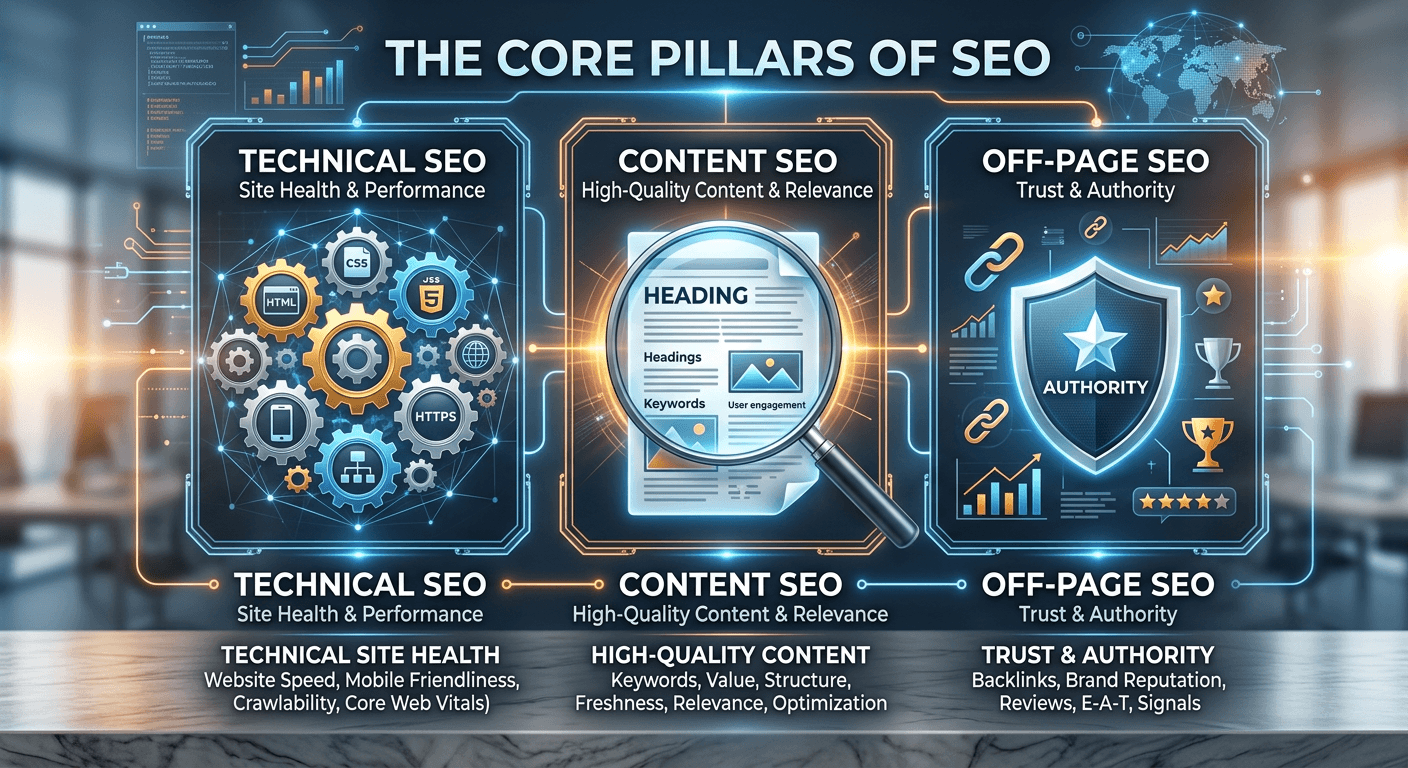
Achieving sustainable organic growth requires a methodical approach to seo optimization for website architecture, content strategy, and technical performance. Rather than chasing fleeting algorithm updates, professional webmasters focus on the foundational elements that search engines prioritize: crawlability, relevance, and user experience. By aligning your site with these core pillars, you ensure that search engines can accurately index, interpret, and rank your content for relevant user queries.
Quick Summary {#quick-summary}
SEO site optimization is the systematic process of improving a website's technical health, content quality, and authority to increase its visibility in search engine results pages. It involves on-page, off-page, and technical refinements that collectively signal to search engines that a site provides high-value answers to specific user needs.
- Technical SEO ensures crawlers can access and index your site without friction.
- On-page content optimization matches user search intent with high-quality, topical authority.
- Off-page signals, such as high-quality backlinks, build domain credibility.
- Core Web Vitals prioritize user experience to satisfy modern ranking algorithms.
Table of Contents {#table-of-contents}
- Foundational SEO Architecture
- Technical SEO Site Optimization
- Content Strategy and Relevance
- Modern User Experience Metrics
- Authority Building and Off-Page Signals
- Comparison of Optimization Pillars
- Frequently Asked Questions
- Recommended Reads

Foundational SEO Architecture {#foundational-seo-architecture}
The architecture of your website is the digital foundation upon which all other SEO efforts rest. A logical site structure allows search engines to crawl your pages efficiently while helping users navigate your information architecture intuitively. When you implement a hierarchical URL structure - for example, domain.com/category/subcategory/page - you provide clear context to search engines about how your content is categorized and related.
Beyond URL structure, internal linking serves as the connective tissue for your site's topical authority. By strategically linking related content, you distribute page authority throughout your site, signaling to search engines which pages hold the most importance. You can learn more about our professional standards for technical excellence when architecting your digital ecosystem to ensure your navigation paths remain clear and effective.
Technical SEO Site Optimization {#technical-seo-site-optimization}
Technical seo site optimization addresses the under-the-hood configuration of your server, code, and indexing directives. Without a clean, crawlable technical structure, your content may never reach the index. Critical tasks include generating an accurate XML sitemap, optimizing your robots.txt file, and ensuring consistent use of canonical tags to prevent duplicate content issues across your domain.
Modern web performance is heavily weighted toward site speed and mobile-first rendering. Search engines now utilize sophisticated bots that render JavaScript to see your page exactly as a user would. If your scripts are blocking the critical rendering path or your server response times are sluggish, you will face significant ranking hurdles. Regular audits of your site's technical infrastructure are essential to prevent silent technical failures from eroding your traffic potential.
Content Strategy and Relevance {#content-strategy-and-relevance}
Developing effective seo for website success depends primarily on content relevance. Search engines have moved beyond simple keyword matching toward semantic understanding, where they evaluate the topical depth and entity relationships within your articles. To succeed, you must move beyond short-form content and embrace comprehensive, exhaustive guides that solve the user's problem completely within the page.
Pro Tip: Focus on E-E-A-T (Experience, Expertise, Authoritativeness, and Trustworthiness) by citing primary sources and using original data or unique case studies. This distinguishes your site from automated or low-effort content competitors.
When optimizing content, ensure that your primary and secondary keywords appear naturally within header tags, meta descriptions, and throughout the body text. However, prioritize user readability over keyword density. The goal is to provide a seamless answer to the user's query, thereby reducing bounce rates and signaling to search engines that your page effectively meets the intent behind the search.
Modern User Experience Metrics {#modern-user-experience-metrics}
Google's Core Web Vitals have cemented user experience as a primary ranking factor. These metrics - specifically Largest Contentful Paint (LCP), Interaction to Next Paint (INP), and Cumulative Layout Shift (CLS) - measure how fast your page loads, how responsive it is to user input, and how stable the page layout remains during loading. A site that shifts layouts while a user attempts to click a button is penalized because it degrades the user experience.
Mobile optimization is no longer optional; it is the default standard. Since search engines index the mobile version of your site first, you must ensure that your mobile view does not hide critical content that is present on the desktop view. A responsive design that scales across devices without sacrificing performance is a prerequisite for long-term SEO health. Protecting your site's data privacy and security through HTTPS is also a non-negotiable ranking signal in modern SEO.
Authority Building and Off-Page Signals {#authority-building-and-off-page-signals}
Off-page SEO primarily concerns the reputation your site has garnered across the internet. While backlinks remain a core component of authority, their value is no longer based on quantity, but rather on quality and thematic relevance. A single link from an authoritative, relevant industry domain is worth significantly more than hundreds of low-quality links from unrelated or spammy sources.
Building this authority often requires an outreach strategy or a content distribution model that earns natural mentions. When high-authority publications cite your research, guides, or original data, it acts as a "vote of confidence" for search engines. Maintaining a high standard of accuracy and integrity in your content makes your site a natural target for these authoritative citations.
Comparison of Optimization Pillars {#comparison-of-optimization-pillars}
| Optimization Pillar | Focus Area | Impact on Rankings | Complexity Level |
|---|---|---|---|
| Technical | Performance, Crawling | Foundation-critical | High |
| On-Page | Keywords, Content, Intent | High (User Engagement) | Medium |
| Off-Page | Links, Brand Authority | High (Trust Signals) | High |
| UX/Design | Web Vitals, Mobile | Essential | Medium |
Frequently Asked Questions {#frequently-asked-questions}
How long does it take to see results from SEO for a website? SEO is a long-term strategy. While technical fixes can show immediate improvements in crawl indexing, content and authority building typically require three to six months to reflect significant shifts in organic traffic.
Do I need a new sitemap after every content update? If you use a modern content management system, your sitemap should update automatically. However, it is good practice to periodically check your search console to ensure new URLs are being discovered and indexed correctly.
Is keyword stuffing still a valid strategy? No. Modern search engines are highly sophisticated and will penalize pages that engage in keyword stuffing. Focus on providing value and using synonyms or LSI keywords to satisfy search intent.
How can I improve SEO for site visibility on mobile devices? Ensure your site is fully responsive, uses a readable font size, and avoids intrusive interstitials that cover the screen. Optimize your images to ensure fast loading times on mobile networks.