Getting Started with SEO Analysis
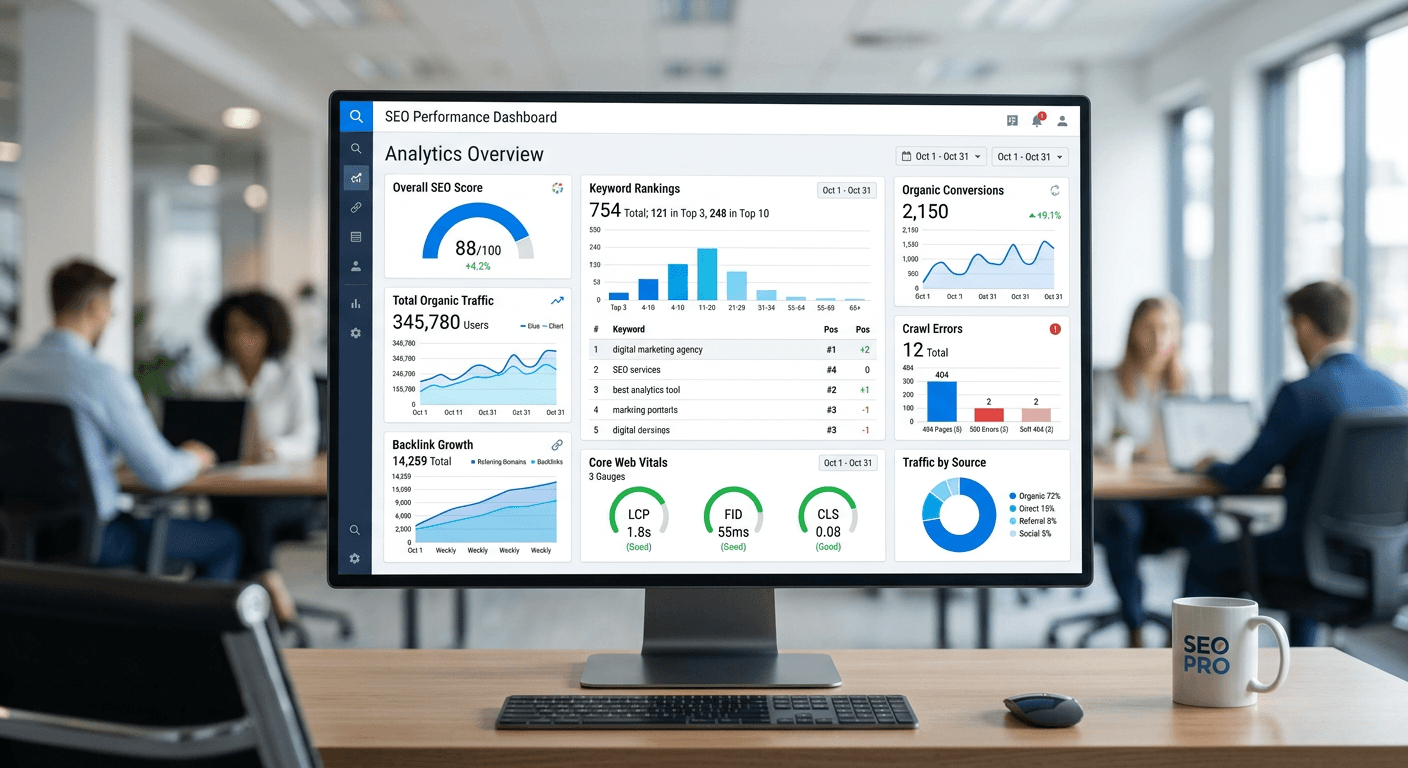
Conducting a comprehensive seo analysis web session is the fundamental first step toward improving your organic search performance. Without a clear diagnostic baseline, optimization efforts are often speculative and inefficient. By evaluating technical health, content quality, and authority signals, you can pinpoint the exact friction points preventing your pages from ranking higher in search engine result pages.
Quick Summary {#quick-summary}
SEO analysis involves auditing a website's technical structure, content relevance, and backlink profile to improve search engine rankings. It identifies performance bottlenecks, indexing issues, and keyword gaps that hinder organic visibility. Effective audits transform raw data into actionable strategies that enhance user experience and satisfy search engine algorithms.
- Audit technical health to fix crawl errors.
- Identify keyword opportunities for content gaps.
- Analyze backlink profiles to improve site authority.
- Optimize on-page elements to increase relevance.
Table of Contents {#table-of-contents}
- Quick Summary
- Technical SEO Foundations
- Evaluating On-Page Content Quality
- Analyzing Backlink Profiles and Authority
- Common Pitfalls and Troubleshooting
- Frequently Asked Questions
- Recommended Reads

Technical SEO Foundations {#technical-seo-foundations}
Technical performance is the bedrock of any successful seo analysis web project. Before you consider your content or keywords, you must ensure that search engine spiders can efficiently crawl and index your site. Common issues such as broken links, slow page load speeds, or improper implementation of canonical tags can render even the best content invisible to search engines.
To begin, use an seo site analyzer to generate a crawl report. Focus specifically on status codes; any 4xx errors represent lost opportunities where users and bots are hitting dead ends. Furthermore, verify that your XML sitemap is current and submitted to search consoles. A clean technical foundation ensures that when you publish new content, it is discovered and evaluated by search engines with minimal latency.
Core Web Vitals and Page Performance {#core-web-vitals-and-page-performance}
Google now prioritizes page experience as a ranking factor. You must analyze your Core Web Vitals, which measure loading performance, interactivity, and visual stability. If your site suffers from high Cumulative Layout Shift (CLS) or slow Largest Contentful Paint (LCP) times, your users will likely abandon the page before the content even loads, signaling to search engines that your site provides a poor experience.
Evaluating On-Page Content Quality {#evaluating-on-page-content-quality}
Once technical health is confirmed, the next phase is to analyse website for seo through the lens of content relevance. Search engines strive to match user intent with the most authoritative and comprehensive pages available. You must audit your existing pages to determine if they adequately answer the target search query or if they suffer from keyword cannibalization where multiple pages compete for the same intent.
Pro Tip: When auditing content, prioritize pages with high impressions but low click-through rates. These are often ranking just outside the top positions and require better title tags or meta descriptions to capture user interest.
Keyword Gap and Intent Mapping {#keyword-gap-and-intent-mapping}
Use a free online seo analysis tool to compare your current keyword rankings against your primary competitors. If your competitors are capturing traffic for terms you currently ignore, you have an immediate content expansion opportunity. Ensure that your H1 and H2 headers incorporate target keywords naturally, providing search engines with clear signals about the page topic, as outlined in our privacy policy regarding data handling.
Analyzing Backlink Profiles and Authority {#analyzing-backlink-profiles-and-authority}
Authority signals remain a crucial ranking factor, as search engines view backlinks as votes of confidence from other domains. When you analyse seo site gratuit, you must look at the quality and relevance of the sites linking to you. A few high-authority, relevant links are significantly more valuable than hundreds of low-quality or spammy links that could potentially trigger manual penalties.
Identify your top-performing content that naturally attracts backlinks. By understanding what drives these links, you can replicate that success across other sections of your site. If you discover a significant number of toxic or irrelevant links pointing to your domain, use a disavow file to inform search engines that you do not want these associations taken into account during ranking calculations.
Common Pitfalls and Troubleshooting {#common-pitfalls-and-troubleshooting}
A frequent error during the analysis process is becoming overwhelmed by data without taking action. You should document your findings in a prioritized checklist, focusing first on high-impact technical issues or content gaps. Avoid making site-wide changes simultaneously, as this makes it impossible to isolate which specific adjustment led to a change in traffic.
Another common issue is ignoring internal linking structures. Search engines rely on internal links to understand the hierarchy of your content. Ensure that your most important pages are linked from your homepage and other high-authority pages. Consult our general terms for best practices on maintaining clean, logical site navigation.
Frequently Asked Questions {#frequently-asked-questions}
How often should I conduct an SEO analysis? It is recommended to run a comprehensive audit quarterly. However, technical scans should be performed monthly to catch new errors or crawl issues immediately.
Is a free online seo analysis tool enough for enterprise sites? While free tools provide excellent baseline data, large websites often require specialized enterprise-grade crawlers that can handle millions of pages and advanced log file analysis.
What is the most important part of an SEO audit? Technical health is the priority. If your site cannot be crawled or indexed correctly, no amount of content or backlink optimization will overcome those fundamental barriers.
Do I need to hire a professional to analyse my website for SEO? Not necessarily. Many tools provide automated diagnostics that are sufficient for most small to medium-sized businesses. A professional is only strictly necessary for complex migrations or manual penalty recovery.